
Best BC wineries and vineyards to know in 2026
Share
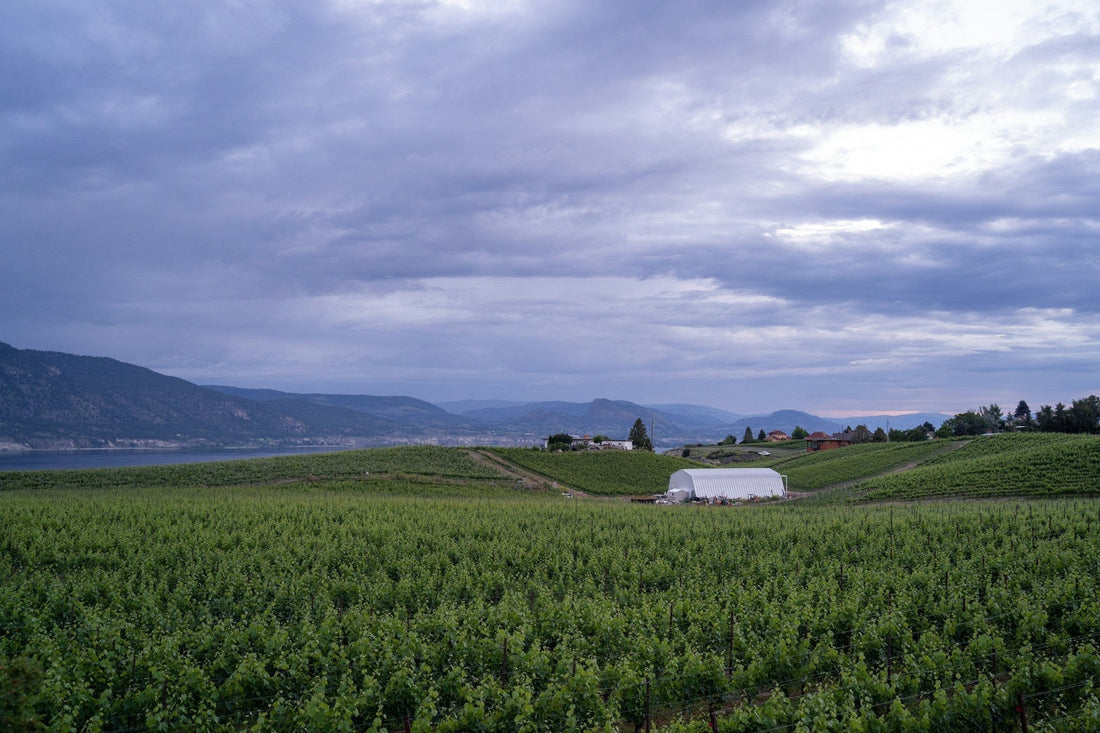
Naramata Road runs along the east side of Okanagan Lake for about fifteen kilometres. It passes old orchards turned into vineyards, and a string of small tasting rooms with hand-painted signs. In October the fog sits low on the water until mid-morning. The gravel pullouts fill with cars carrying Alberta plates as often as BC ones.
That's the kind of trip that gets people asking where else in the province is worth the drive. BC has a lot more wine country than most Canadians realize. It's spread across a bigger, stranger geography than a single road trip covers.
The short answer
Six wineries make up Wine Club Canada's current British Columbia rotation, spread across four sub-regions. On the Naramata Bench: Bench 1775 Winery and Moraine Estate Winery. On the Golden Mile Bench near Oliver: Gold Hill Winery. Around Osoyoos and the Black Sage area: Moon Curser Vineyards and Stoneboat Vineyards. In Summerland: Okanagan Crush Pad Winery.
Each one earned its spot through our wine subscription program, the same way every winery does. Years of tasting through the valley and relationships built with growers put them there, one bottle at a time. For a full rundown of the province, our British Columbia wine club page covers all of this in one place.
Most of this wine country lies in the Okanagan Valley, on the unceded territory of the syilx Okanagan people. The valley stretches roughly 250 kilometres north to south. The climate shifts a lot over that distance. A Riesling grown near Kelowna and a Syrah grown near Osoyoos barely taste like they came from the same province.
Naramata Bench: clay cliffs and small producers
The Bench follows the lake north of Penticton, on a narrow strip of land squeezed between the water and the hills. Soil here shifts from sand to gravel to pale clay within a few hundred metres. That variety is one reason the Bench holds dozens of small producers rather than a handful of large ones.
Bench 1775 Winery is a family-run operation on Naramata Road, known for its 30-acre waterfront property running down to the lake. It's one of the wineries we've featured in past boxes. The wines carry that lakefront ripeness, with the Bench's acidity holding up underneath.
The white clay bluffs along this stretch gave Moraine Estate Winery its name. That glacial terrain leaves a chalky, mineral edge in the wines. We've poured Moraine reds and whites both, and the clay shows up in the glass more than the label ever explains.
Golden Mile Bench: BC's first official sub-appellation
The Golden Mile runs along the western side of the valley south of Oliver, and its slopes face east. That aspect does more work than it sounds like. Vines catch the gentle morning sun, then the mountains throw shade over them through the afternoon, so the fruit ripens slowly and holds onto its acidity. In 2015, the BC government recognized it as the province's first official sub-appellation. Wines labelled "Golden Mile Bench" have to source at least 95 percent of their grapes from that specific slope. The rule is officially called the Wines of Marked Quality Regulation.
Gold Hill Winery farms 24 acres on the Golden Mile itself. The family holds additional land elsewhere in the valley. The Golden Mile fruit, grown under that same rule, is what ends up in our featured bottlings.
Black Sage Bench: heat, sand, and one gravel exception
Wind-blown sand covers the ground between Oliver and Osoyoos, and that sand is what Black Sage Bench is built on. Cabernet Sauvignon and Syrah dominate the plantings here, big reds chosen to handle the heat.
On a stonier pocket of the same bench, the Black Sage Gravelbar, Stoneboat Vineyards plants toward Pinot Noir and sparkling wine. It's an unusual choice for this stretch of the valley, and it's exactly why we keep Stoneboat in rotation.
Osoyoos: Canada's hottest wine town
Osoyoos sits at the south end of the valley, a few minutes from the US border. It's the hottest, driest wine town in BC. Summer highs regularly push into the low thirties, and the lake keeps the nights from cooling off too fast.
Gold smugglers once slipped across the border near here under cover of darkness, cursing the moon on the nights it gave them away. That story comes from the winery itself, and it is where Moon Curser Vineyards got its name. It farms the East Bench above Osoyoos. The wines lean into unusual varietals for the region: Tannat and Arneis, alongside the Cabernets and Syrahs more typical of the area.
Summerland: 375 organic acres across two sites
Drive north from Penticton and you reach Summerland, on the west side of Okanagan Lake. Orchard and vineyard land mix together up here, and all of it stays cooler than the benches further south.
Okanagan Crush Pad Winery farms 375 acres across two certified organic sites: Switchback Vineyard, out on Fosbery Road, and Garnet Valley Ranch on the high bench north of town. Switchback earned its organic certification in August 2015. Garnet Valley Ranch is the strange one. Alongside the vines, its 320 acres carry a lavender field and eight acres of organic vegetables. The winery opened in 2011 as a custom crush facility, pressing other people's fruit. Today it makes only its own wine, under the Haywire, Narrative, Free Form and Bizou + Yukon labels.
Fraser Valley and Vancouver Island: BC wine past the Okanagan
Fraser Valley sits about an hour east of Vancouver, and its climate is wetter and cooler than the Okanagan's. That suits aromatic whites, Gewurztraminer and Bacchus among them.
Vancouver Island is a ferry ride from the mainland. Its wineries lean toward sparkling wine and Pinot Gris, grapes that do well in a cool, marine climate. The Cowichan Valley, on the island's east side, has built a real reputation for cool-climate Pinot Noir. It surprises people who assume BC only makes big Okanagan reds.
For readers based in the city itself, our Vancouver wine club page covers delivery options closer to home.
How big is BC's wine industry
Wine Growers British Columbia, the province's industry association, counted 277 licensed grape wineries in BC as of June 2026. Most of those are small operations, and BC Liquor stores only have shelf space for a fraction of them.
That's a big part of why direct-to-consumer sales matter so much here. Wine clubs, tasting room visits, and mail order fill the gap that shelf space leaves. The BC Wine Authority administers the province's sub-appellation and VQA (Vintners Quality Alliance) system. We carry a rotating lineup of VQA-certified wines for anyone who wants to shop by that standard directly.
What to pair with a bottle of BC wine
BC salmon is the obvious match. The fat in the fish plays well against the acidity in Okanagan whites and sparkling wines from the Island. Nanaimo bars work the same way against something off-dry, an icewine or a late-harvest Riesling. The sweetness leans into the chocolate instead of fighting it.
Alberta beef calls for something with more structure, a BC Syrah or an Okanagan Cabernet from one of the Black Sage or Osoyoos producers. And if a Cowichan Valley Pinot Noir made it into your box, try it with duck or another game dish. The marine coolness in the wine holds up against richer meat better than most people expect.
Frequently asked questions
What is the best wine region in BC?
The Okanagan Valley produces most of BC's wine and gets most of the attention. Each bench makes something different. The Naramata Bench favours small, mixed-varietal producers. The Golden Mile Bench favours structured reds and whites. Black Sage and Osoyoos lean toward the valley's biggest, ripest reds. Fraser Valley and Vancouver Island are worth a look too, especially for whites, sparkling, and cool-climate Pinot Noir.
What's the difference between the Naramata Bench and the Golden Mile Bench?
They sit on opposite sides of the valley, roughly 50 kilometres apart. Naramata runs north of Penticton along the lake's east side. The Golden Mile is further south, above Oliver, on the western side. Both are official BC sub-appellations now, under the same 95 percent sourcing rule. The Golden Mile just got there first, in 2015, with Naramata following in 2019. What separates them is what grows there. Naramata holds a wider mix of small producers and varietals.
Is Vancouver Island good for wine?
Yes, though it's a different scale from the Okanagan. Island wineries are mostly small and clustered around the Cowichan and Saanich valleys, close enough together that a weekend covers a lot of them without much driving. Ferry schedules shape an Island wine trip more than anything in the glass does.
Can you buy BC wine outside of BC Liquor stores?
Yes. Most small BC wineries sell straight from their tasting rooms, and many will ship. The catch is that what can cross a provincial border depends on where you live, so check the rules for your province before ordering a case from out west.
How does Wine Club Canada choose which BC wineries to feature?
We feature one Canadian winery a month, twelve a year, so a BC producer is competing for a slot against Niagara and everywhere else. Volume usually decides it. A winery making a few hundred cases of something we love often can't supply a national box, and that's the most common reason a producer we admire doesn't make it in.
Worth the drive, or worth ordering in
An October drive up the Naramata Bench is worth planning, and so is a ferry out to the Cowichan Valley. For the months in between, a wine subscription brings the BC bottles to your door instead.
If you're shopping for someone in Vancouver itself, our Vancouver gift basket page has options too. Our guide to Vancouver gifts and souvenirs covers more beyond wine.
Try one this month. Or don't, but at least look past the LCBO Top 5 next time you're picking a bottle.


